Sensory Processing Awareness Month How to Support Children at Home and in the Classroom

October is Sensory Awareness Month, a helpful reminder that children take in information through their senses every minute of the day. For some children, this feels unmanageable. For others, ordinary sounds, textures, lights, smells, movements, or body signals can feel too strong, too weak, or confusing.
A child who melts down when the hand dryer starts, chews their sleeve all day, refuses certain foods, or cannot sit still during story time is not being “difficult” on purpose. Their nervous system may be working hard to process the world around them.
Understanding these sensory needs can change the way adults respond. Instead of seeing behaviour as defiance, it becomes communication. Instead of asking, “Why won’t they just cope?”, the better question is, “What is their body telling us?”

What sensory awareness means
Sensory awareness is the ability to notice, understand, and respond to information from the senses. Most people think of the five familiar senses: sight, sound, smell, taste, and touch. Children also rely on other body-based senses that shape comfort, movement, attention, and safety.
These include:
Vestibular sense
This helps a child understand movement, balance, and where their head is in space. It is involved in swinging, spinning, climbing, sitting upright, and walking on uneven ground.
Proprioception
This gives the body feedback from muscles and joints. It helps a child know how hard to press a pencil, how much force to use when hugging, and where their limbs are without looking.
Interoception
This helps a child notice internal body signals, such as hunger, thirst, needing the toilet, pain, tiredness, or a racing heart.
When the sensory system works smoothly, a child can filter information and focus on what matters. They can ignore the hum of a light, the feeling of a sock seam, or distant playground noise. When sensory processing is more sensitive, under-responsive, or variable, those same experiences can affect mood, behaviour, learning, and relationships.
Sensory Awareness does not mean diagnosing every preference or discomfort. Everyone has sensory likes and dislikes. The concern grows when sensory responses regularly get in the way of daily life, learning, sleep, eating, hygiene, play, or emotional wellbeing.
Why sensory needs can look like behaviour
Adults often see the behaviour before they see the sensory trigger. A child may run from the dinner table, push another child in line, hide under a desk, refuse to put on a school jumper, or shout during assembly. The behaviour is visible. The sensory experience underneath it is less obvious.
A useful starting point is to view behaviour as a sign of stress, discomfort, overload, or unmet regulation needs. This does not mean every behaviour is excused. Children still need boundaries, safety, and guidance. It does mean support works better when it addresses the cause, not only the surface action.
A child may be:
Sensory sensitive
Sounds, smells, textures, lights, or movement may feel intense or painful. This child may avoid busy spaces, cover their ears, become upset by clothing tags, or struggle with crowded classrooms.
Sensory seeking
The child may need extra input to feel organised. They may jump, crash, chew, fidget, spin, press hard, talk loudly, or touch everything.
Under-responsive
The child may miss sensory information that others notice. They may not respond to their name straight away, seem unaware of mess on their face, use too much force, or not notice when they are cold or hurt.
Mixed in their responses
Many children do not fit one neat pattern. A child might hate loud sounds but crave deep pressure. Another might seek movement at home but shut down in a noisy classroom.
Behaviour is often the body’s way of saying, “This is too much,” “I need more input,” or “I do not know what to do next.”
Common signs that a child may need sensory support
Sensory needs can show up differently depending on age, setting, tiredness, health, and stress. A child may cope well in one place and struggle in another. School may require sitting still, filtering noise, following instructions, and managing social rules all at once. Home may be where the child finally releases the effort of holding everything together.
Signs to notice include:
Strong reactions to everyday sounds, such as hand dryers, vacuum cleaners, bells, or alarms
Distress around clothing, shoes, hair brushing, tooth brushing, or nail cutting
Avoidance of messy play, finger painting, sand, grass, or certain food textures
Frequent chewing on sleeves, pencils, toys, or fingers
Constant movement, climbing, jumping, rocking, spinning, or crashing into cushions
Difficulty sitting for meals, lessons, reading, or group time
Covering ears, hiding, freezing, crying, or running away in busy spaces
Trouble with transitions, especially from a preferred activity to a demanding one
Using too much or too little force when writing, playing, or hugging
Not noticing body cues, such as hunger, toileting needs, thirst, or tiredness
Meltdowns after school, parties, shopping trips, clubs, or assemblies
A meltdown is not the same as a tantrum. A tantrum usually has a goal, such as wanting an item or avoiding a task. A meltdown is a loss of control caused by overload. During a meltdown, the child needs reduced demands, safety, calm support, and time to recover.

How to support a child at home
Home support works best when it is respectful, predictable, and realistic. Families do not need expensive equipment or a perfect sensory room. Small changes can reduce stress and help a child feel safer in their body.
Notice patterns before changing everything
Start with observation. Keep a simple note for one or two weeks. Look for patterns around time of day, environment, sleep, hunger, transitions, clothing, noise, and social demands.
Helpful questions include:
What happened just before the child became upset or restless?
Was the space noisy, bright, crowded, or unpredictable?
Was the child hungry, tired, unwell, or rushed?
Did the child need movement, pressure, quiet, or help understanding what came next?
What helped them recover?
Patterns make support more precise. If tooth brushing is always a battle, the trigger might be taste, bristle texture, pressure, timing, or standing in a bright bathroom. Each one needs a different response.
Create a predictable daily rhythm
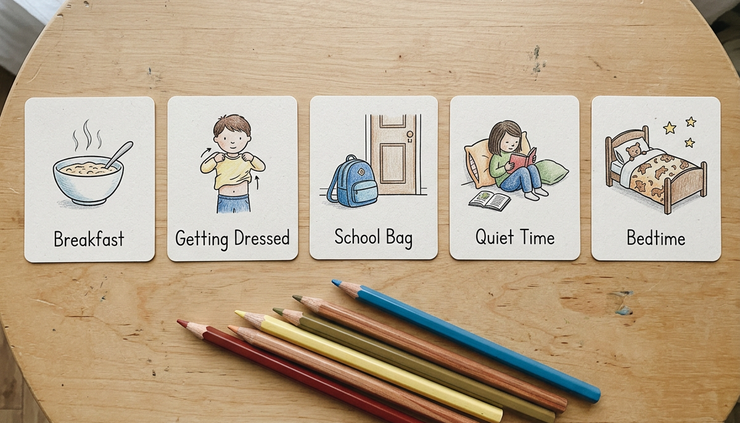
Predictability can calm the nervous system. Children often cope better when they know what is happening now, what comes next, and when a demand will end.
Try:
A simple visual routine for mornings and bedtime
Warnings before transitions, such as “five minutes, then shoes”
A consistent place for school bags, shoes, coats, and comfort items
Extra time for tasks that involve sensory discomfort
A calm after-school routine with food, drink, and low demands
Some children need quiet after school before talking. Others need movement before homework. A short reset can prevent the rest of the evening becoming harder than it needs to be.
Offer sensory tools without making them rewards
Sensory support should not be treated as a treat that children earn. Glasses help a child see. A movement break, chew tool, ear defenders, or fidget can help a child regulate.
Home sensory options might include:
A blanket, body sock, or firm cushion for deep pressure
A chew-safe necklace or pencil topper
Noise-reducing headphones
A small tent, canopy, or cosy corner
Heavy work, such as carrying shopping, pushing a laundry basket, wall pushes, or animal walks
Movement, such as jumping on a safe surface, dancing, crawling, swinging, or walking outside
Tactile play, such as water, play dough, rice, lentils, or textured fabrics, if the child enjoys it
Always consider safety, age, and supervision. Weighted items should be used carefully and only when suitable for the child.
Reduce sensory battles around care tasks
Daily care can involve intense sensory input. Washing, brushing, dressing, eating, and toileting may all feel challenging.
Support can include:
Cutting clothing labels out and choosing seamless socks where possible
Letting the child choose between two acceptable outfits
Warming towels before bath time
Trying different toothbrushes, toothpaste flavours, or brushing positions
Using firm, predictable pressure rather than light touch if the child prefers it
Serving new foods alongside safe, familiar foods
Allowing a child to look at, smell, touch, or lick a food before eating it
Forcing sensory discomfort can increase anxiety and resistance. Gentle exposure works best when the child feels safe and has some control.

How to support a child in the classroom
Classrooms are busy sensory environments. There may be scraping chairs, bright displays, bells, chatter, movement, smells from lunch boxes, and changing expectations. A child who has sensory differences may spend a large part of the day trying to stay regulated enough to learn.
Good classroom support often benefits many pupils, not only one child. Clear routines, calm spaces, movement breaks, and visual cues make learning more accessible.
Make the environment easier to process
Not every classroom can be quiet, but it can be made more predictable and less overwhelming.
Useful changes include:
Seating the child away from high-traffic areas, doors, pencil sharpeners, or loud equipment
Reducing visual clutter around the board or work area
Letting the child wear ear defenders during noisy times
Providing a calm place the child can use before reaching crisis point
Using natural light where possible and being mindful of flickering lights
Giving advance warning before bells, fire drills, assemblies, or timetable changes
The goal is not to remove every challenge. The goal is to lower unnecessary sensory load so the child has more energy for learning.
Build movement into the school day
Many children need movement to focus. Asking a movement-seeking child to “sit still and listen” may increase distraction, not reduce it.
Movement can be planned in simple ways:
Give jobs that involve carrying books, moving chairs safely, or delivering messages
Use standing workstations or floor work for short tasks
Add movement between carpet time and table work
Offer chair push-ups, wall pushes, or stretching
Use a wobble cushion, foot band, or fidget when appropriate
Break long tasks into shorter chunks
The movement should match the child’s needs. Spinning may excite one child but settle another. Heavy work often helps children who need grounding input, while some children need gentle rocking, walking, or stretching.
Teach regulation as a skill
Children are not born knowing how to explain sensory overload. They need language, modelling, and practice when calm.
Adults can teach phrases such as:
“This is too loud.”
“I need a break.”
“My body needs to move.”
“I need help.”
“I feel wobbly.”
“I need quiet.”
Visual tools can help younger children or children who find speech harder when overwhelmed. A simple feelings scale, colour chart, or choice board can give a child a way to ask for support before behaviour escalates.
This is a key part of supporting children with sensory needs. The aim is to help them recognise body signals, ask for help, and use strategies that keep them included.
Respond calmly when overload happens
When a child is overwhelmed, long explanations rarely help. The thinking part of the brain is already under stress. Short, calm, predictable responses work better.
Try to:
Lower your voice
Reduce talking
Move other children away if needed
Offer a safe space
Avoid sudden touch unless it is necessary for safety
Use simple choices, such as “quiet corner or walk?”
Wait until the child is calm before problem-solving
Afterwards, reflect without blame. Ask what was hard, what helped, and what could be tried next time. If the child cannot answer, adults can still share observations gently.
Working together across home and school
Children benefit when adults share what they notice. A child may have different needs at home and school, but the same nervous system travels between both.
A simple communication plan can help. Families and school staff can share:
Known triggers
Early signs of overload
Helpful calming strategies
Movement needs
Food, sleep, or health factors that may affect the day
Successful wording or visuals
Situations that need planning, such as trips, assemblies, PE, lunch halls, or dress-up days
If sensory needs affect daily life in a significant way, it may be helpful to speak with a GP, health visitor, occupational therapist (blog post), special educational needs coordinator (SENDCO) (blog post), or another qualified professional. This article is for general information only and does not replace personalised health or education advice.
What children need adults to remember
Sensory support is not about making life effortless. Children still need to learn flexibility, safety, patience, and coping skills. They also need adults who understand that a nervous system under strain cannot simply be talked into calm.
The most helpful support is usually:
Respectful
The child’s sensory experience is real, even when adults do not feel it in the same way.
Consistent
Strategies work better when children can access them before crisis, not only after things go wrong.
Individual
What calms one child may irritate another. Observation matters.
Inclusive
Support should help the child take part in family life, learning, friendships, and play.
Flexible
Needs can change with tiredness, illness, growth, stress, and environment.
A child who feels understood is more likely to trust adults, try new challenges, and learn self-advocacy. That starts with seeing sensory needs not as bad behaviour, but as useful information.
October is a good moment to raise awareness, but children need sensory understanding all year round. Small changes, made with patience and curiosity, can make home calmer, classrooms more accessible, and daily life kinder for everyone involved.


Comments