Play Based Learning Why It Matters for Every Child

Children don’t separate play from learning. Adults do.
That’s why play-based learning still matters. It’s not a soft option. It’s not “just playing”. It’s one of the most natural ways children explore the world, build skills, and show what they know.
Give a toddler a cardboard box, and they’ll test size, space, sound, balance, language, turn-taking, and risk. Give a six-year-old blocks, and they’ll plan, compare, negotiate, fail, rebuild, and try again. Give an older child a role-play problem or design challenge, and they’ll practise thinking that feels far more alive than a worksheet.

What play-based. learning really means
Play based learning is learning through active, meaningful play. The child is involved, curious, and doing something with a purpose, even if that purpose looks small to an adult.
It can be child-led, adult-guided, or a mix of both.
Child-led play might look like a child building a “shop” with shells, leaves, and toy money. They choose the idea. They make the rules. They decide what happens next.
Adult-guided play might look like an educator adding scales, price labels, or a story prompt. The adult doesn’t take over. They stretch the thinking.
Both matter.
Good play is not chaos. It often has rhythm, rules, roles, and problem-solving. Children test ideas in a safe way. They ask questions without always using words. They learn from the result.
A child pouring water between cups is exploring volume. A child pretending to be a bus driver is learning language, sequence, and social roles. A child making a den is using planning, measurement, teamwork, and emotional regulation.
The learning is real because the child cares about it.
Should we stop using play in education
No. We should stop using poor-quality play as a filler.
There’s a big difference between rich play and “keep them busy” play. Children don’t need a room full of random toys with no thought behind them. They need time, space, materials, relationships, and adults who know when to join in and when to step back.
Formal learning in Education
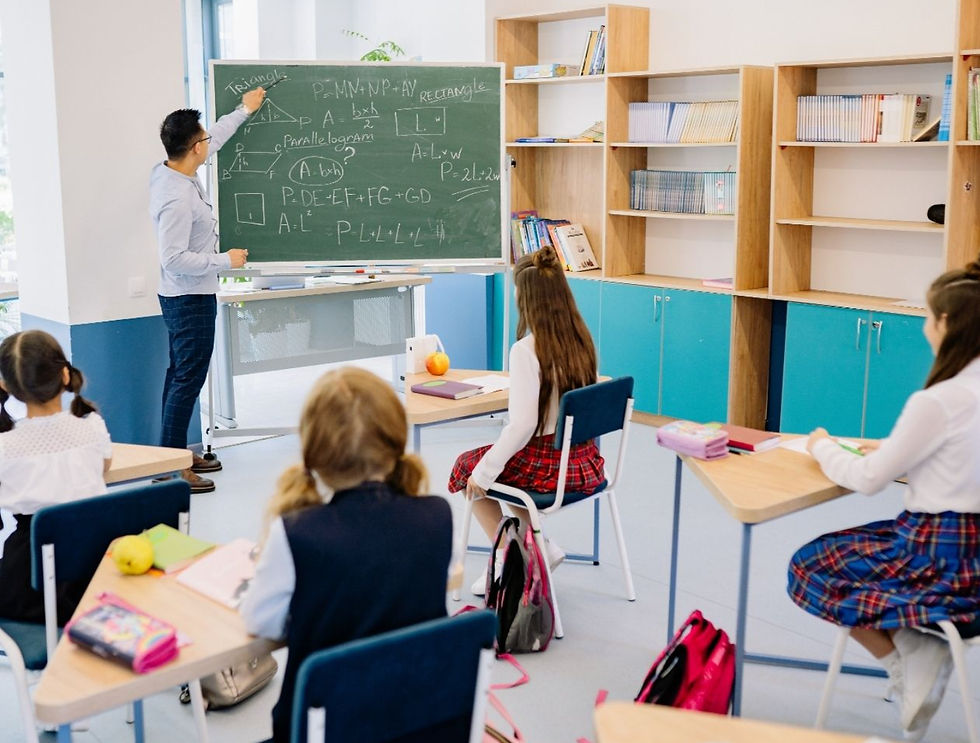
The pressure to make learning look more formal can start early. Sitting still, completing sheets, and giving the “right” answer can feel tidy. It can also miss how young children actually learn.
That doesn’t mean every lesson should be free play. Older children need direct teaching too. They need clear instruction, practice, feedback, reading, writing, maths, science, and knowledge.
The point is balance.
Play can sit beside direct teaching. It can prepare children for formal learning. It can help them practise new ideas. It can reveal gaps an adult may not see in a written task.
A child might know a number fact on paper, yet struggle to share materials fairly in a game. Another child might find handwriting hard, but explain a complex story through puppets. Play gives adults more routes into a child’s thinking.
Infants learn through their whole body
For babies and toddlers, play is the main route into learning. They learn through touch, movement, sound, smell, faces, and repeated actions.
A baby drops a spoon again and again. It can feel tiring. But the baby is learning cause and effect. They’re also learning something emotional: “When I act, someone notices.”
An infant reaching for a soft ball is working on movement, focus, and persistence. A toddler filling and emptying a basket is exploring space and order. Peekaboo builds memory, attention, and trust.
This is why very young children need responsive adults. A baby does not need a lesson on communication. They need someone to notice their look, sound, gesture, or movement and respond.
Helpful play for infants often looks simple:
Songs with actions and pauses
Safe objects with different textures
Floor time with room to roll, crawl, and reach
Water play with close supervision
Posting games, hiding games, and turn-taking games
Picture books with pointing, naming, and repeating
The adult role is not to quiz. It’s to tune in.
If a toddler keeps lining up toy animals, the learning may be about order, pattern, control, or comfort. An adult can join by saying, “You’ve put the big cow first. I wonder who comes next.” That small comment adds language without breaking the child’s play.

Junior children learn by making ideas visible
Junior children often sit in the sweet spot for play. They can imagine, explain, build, argue, repair, and improve. Their play becomes more social and more detailed.
A group building a bridge from blocks might talk about height, balance, fairness, and design. They may not use adult words like “engineering”, but the thinking is there.
Role play is powerful at this age. A pretend café can support writing menus, reading signs, counting money, using polite language, and managing social roles. A doctor’s surgery can lead to talk about bodies, care, waiting, and feelings. A spaceship can open up storytelling, shape, maps, and science questions.
This kind of play helps children practise skills in context. They don’t just write because an adult asks them to. They write because the game needs a sign, a ticket, a list, or a message.
That matters.
When learning has a reason, children often stay with it for longer. They also take more risks. They’ll try a harder word if it helps the story. They’ll count again if their shop has gone wrong. They’ll negotiate because the game depends on it.
Adults can support junior children by adding just enough challenge:
Add clipboards, labels, rulers, maps, timers, scales, or notebooks
Ask open questions that invite thinking
Model useful language without taking over
Help children solve conflict with words
Offer new materials when play gets stuck
Notice and name the learning afterwards
That last point is easy to miss. After play, a short reflection can help children connect what they did with what they learned.
“You changed the bridge after it fell. What made it stronger?”
That question builds thinking. It also gives the child pride in the process, not just the result.
Older children still need play, but it takes a different shape.
Play doesn’t stop being useful when children get older. It just looks different.
Older children may not call it play. They may call it a challenge, drama, debate, simulation, project, investigation, design task, game, or experiment. The ingredients stay familiar: choice, imagination, rules, feedback, and active problem-solving.
In history, children can take on roles to understand different viewpoints. In science, they can design a test and predict what might happen. In English, they can act out a scene before writing it. In maths, they can use games to practise strategy, pattern, and reasoning.
Play also supports older children socially. They try leadership. They manage disagreement. They learn that ideas can be changed. They practise losing, adapting, and trying again.
This can be especially helpful during the later primary years and early secondary years, when some children become afraid of getting things wrong. Play lowers the stakes. It creates a space where mistakes are part of the task.
That doesn’t make it childish. It makes it human.
A well-designed game can demand careful reading. A building challenge can demand precise measurement. A drama task can demand empathy and strong memory. A group investigation can demand planning, patience, and clear speech.
Older children need to see that play is not a reward after “real work”. It can be the work.

What should adults do during play?
The adult role in play is active, but not controlling.
Sometimes the best move is to watch. What is the child trying to do? What problem are they solving? What keeps going wrong? Who is left out? Who is leading? Who needs a word, a prop, or a pause?
At other times, adults can join gently.
Try these phrases:
“Tell me about what you’re making.”
“What could you try next?”
“How did you decide that?”
“I can see you changed your plan.”
“What do you need for the game to work?”
“How can we make space for everyone?”
Notice these questions don’t test for one right answer. They open a door.
Open-ended resources, such as blocks, fabric, boxes, water, sand, clay, loose parts, and natural objects, often invite deeper play because they can become many things. A cardboard tube can become a telescope, tunnel, microphone, trumpet, tower, or chute.
Good play spaces also need time. Play often starts slowly. If children move on every few minutes, they don’t reach deeper thinking. They need time to plan, repeat, change, and return.
What high-quality play looks like
Strong play has a few signs. It doesn’t need to look perfect. It often looks busy, noisy, and slightly messy. But there is purpose underneath.
Look for these signs:
Children return to the same idea and improve it.
They talk, gesture, build, draw, move, or act with intent.
They solve real problems in the play.
They use language linked to the task
They include rules, roles, patterns, or stories
They show focus and persistence
They adapt when something fails
They make links to things they already know.
If a child keeps making maps, offer treasure stories, real maps, grid games, or routes around the room. If a child loves sorting, offer buttons, shells, leaves, or data games. If a child keeps acting out rescue scenes, add books about helpers, simple first-aid role play, or writing emergency signs.
Follow the interest, then stretch it.
Play and formal learning can work together.
Some people worry that play will hold children back from reading, writing, or maths. Poor planning might. Good play won’t.
Play can build the foundations that formal learning needs.
Before writing, children need hand strength, ideas, language, memory, and a reason to communicate. Before maths, they need real-life experience with more, less, shape, pattern, size, position, and number. Before reading, they need sounds, stories, attention, vocabulary, and joy in books.
Play supports all of this.
A child who makes a menu is practising mark-making and meaning. A child who shares out cups at a tea party is working with number. A child who builds a tower and compares it with another is exploring measurement. A child who retells a story with puppets is practising sequence and language.
Formal learning can then name, sharpen, and extend those ideas.


Comments