Traditional vs Progressive Education

Updated: Sep 8

Traditional vs Progressive Education: Navigating Neurodiversity in Learning
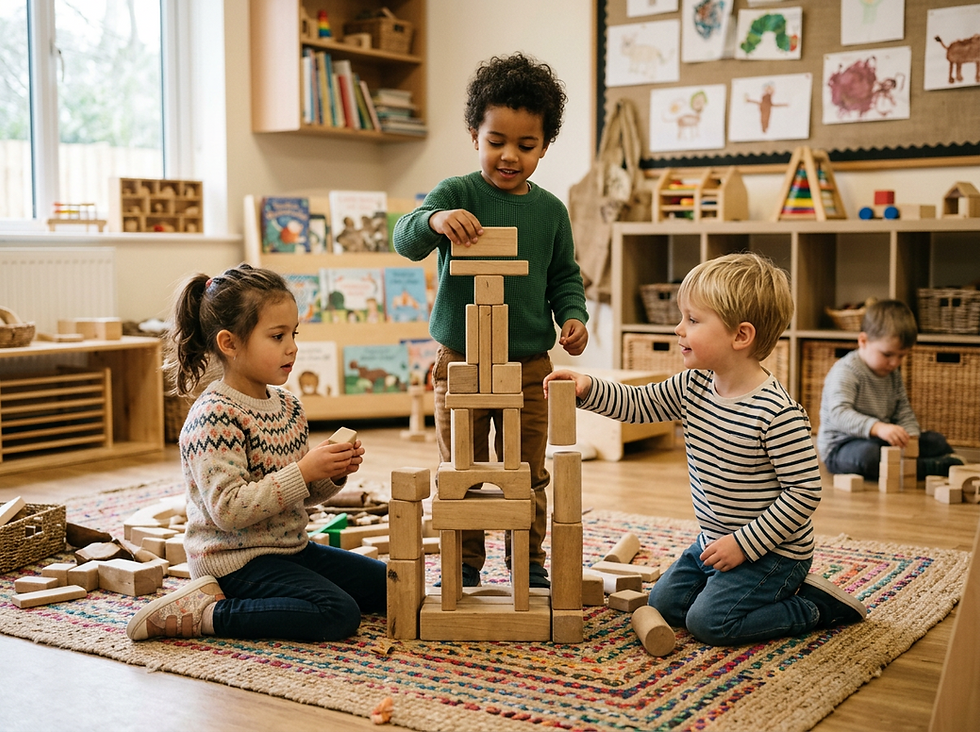
Traditional vs Progressive education is a topic of conversation, especially when it comes to neurodiversity and the different ways we learn. Progressive education is an approach to teaching that puts the learner at the centre. Instead of mainly asking students to memorise information and follow instructions, it emphasises understanding, exploration, problem-solving, collaboration, and learning through experience.
Understanding the Differences: Progressive vs Traditional Education
Progressive education | Traditional education |
Student-centred | Teacher-centred |
Students actively participate | Students often listen and receive information. |
Learning through projects, discussion and practical activities | Learning often through textbooks, lectures and exercises |
Focuses on understanding and applying knowledge | Often focuses more on memorisation and correct answers. |
Encourages questioning and independent thinking | Teacher is usually the main authority. |
Assessment may include projects, presentations and ongoing feedback. | Greater emphasis on tests and exams |
Curriculum can be adapted to students' interests and needs. | Curriculum is generally more structured and standardised. |
A Simple Example of Traditional and Progressive Education
Imagine students are learning about plants. In a traditional classroom, the teacher might explain the parts of a plant. Students copy notes, memorise each part's functions, and then take a test.
In a progressive classroom, students might grow their own plants. They investigate what happens when plants receive different amounts of light or water. They record their observations, discuss their findings, and use their discoveries to understand how plants grow. The key difference is not simply what students learn, but how they learn it.
Where Did the Idea Come From?
Progressive education is strongly associated with educational thinkers such as John Dewey. Dewey argued that education should connect learning with students' experiences. Schools should help children develop the ability to think, investigate, and participate in society, rather than memorise facts.
It's also worth noting that "traditional education" isn't necessarily bad, and "progressive education" isn't automatically better. Direct teaching, memorisation, and structured practice can be extremely useful. Progressive approaches can also become ineffective if students are given too little guidance. So, broadly, the distinction is:
Traditional education tends to emphasise transmitting knowledge from teacher to student;
Progressive education tends to emphasise students actively constructing and applying knowledge.
In practice, many modern schools use a mixture of both approaches.
Key Differences
Aspects | Traditional Education | Progressive Education |
Methods and Techniques
Traditional Education
Lecture-based instruction: The teacher delivers content while students take notes.
Memorisation: Rote learning of facts, formulas, and historical dates.
Drill and practice: Repetitive exercises to reinforce skills (e.g., multiplication tables).
Grade-based evaluation: Tests and quizzes to measure retention.
Uniform standards: All students follow the same pace and curriculum.
Progressive Education
Experiential learning: Learning by doing (e.g., science experiments, role-playing).
Project-based learning (PBL): Students work on real-world projects over extended periods.
Inquiry-based learning: Students ask questions, conduct research, and solve problems collaboratively.
Socratic method: Dialogue and debate to explore ideas.
Differentiated instruction: Tailored learning paths based on students’ interests and abilities.
Strengths of Traditional Education
✅ Clear structure: Easy to implement and scale in large systems.
✅ Efficiency: Focuses on core knowledge and skills, ensuring baseline competency.
✅ Accountability: Standardised testing provides measurable outcomes.
✅ Cultural transmission: Preserves historical and cultural knowledge.
✅ Preparation for structured environments: Aligns with traditional workplaces and institutions.
Strengths of Progressive Education
✅ Engagement: Higher student motivation due to relevance and autonomy.
✅ Critical thinking: Encourages creativity, problem-solving, and adaptability.
✅ Social-emotional development: Fosters empathy, collaboration, and emotional intelligence.
✅ Lifelong learning: Prepares students to navigate an uncertain, fast-changing world.
✅ Equity: Can address diverse learning needs and backgrounds more effectively.
Criticisms of Traditional Education
❌ Lack of engagement: Can stifle creativity and intrinsic motivation.
❌ One-size-fits-all: Fails to accommodate diverse learning styles or paces.
❌ Overemphasis on memorisation: May prioritise test scores over deep understanding.
❌ Rigid hierarchy: Teacher-student power dynamics can limit dialogue.
❌ Slow adaptation: Struggles to keep pace with technological and societal changes.
Criticisms of Progressive Education
❌ Resource-intensive: Requires smaller class sizes, trained teachers, and flexible spaces.
❌ Lack of standardisation: Outcomes can vary widely, making assessment difficult.
❌ Potential for chaos: Without clear structure, some students may struggle with autonomy.
❌ Parental concerns: May be perceived as “too loose” or lacking rigour.
❌ Implementation challenges: Difficult to scale in public school systems.
Examples of Progressive Education Models
Montessori Method: Child-led learning with hands-on materials and mixed-age classrooms.
Reggio Emilia Approach: Emphasises project-based learning and the “hundred languages of children” (art, expression, and exploration).
Waldorf Education: Holistic approach integrating arts, movement, and nature-based learning.
Democratic Schools: Students have a say in curriculum and school governance (e.g., Sudbury Valley School).
High Tech High (USA): Project-based learning with a focus on real-world applications.
Hybrid Approaches
Many modern schools blend elements of both models:
Blended learning: Combines traditional instruction with online, self-paced modules.
Flipped classrooms: Students learn content at home (e.g., via videos) and apply it in class with teacher guidance.
Competency-based education: Students progress when they master skills, not by time spent in class.
Which Approach is Better?
There is no one-size-fits-all answer. The effectiveness depends on:
Context: Traditional education may suit structured systems (e.g., STEM fields), while progressive education may excel in creative or interdisciplinary fields.
Student needs: Some students thrive in structured environments; others need autonomy.
Teacher training: Progressive methods require highly skilled facilitators.
Societal goals: Traditional education may prioritise stability and cultural continuity, whereas progressive education prioritises innovation and social change.
In conclusion, understanding the differences between traditional and progressive education can empower us to support neurodivergent children more effectively. By recognising their unique learning styles, we can create environments that foster their growth and development. Let's embrace the learning journey together!


Comments